Vishnu
Baburaj.
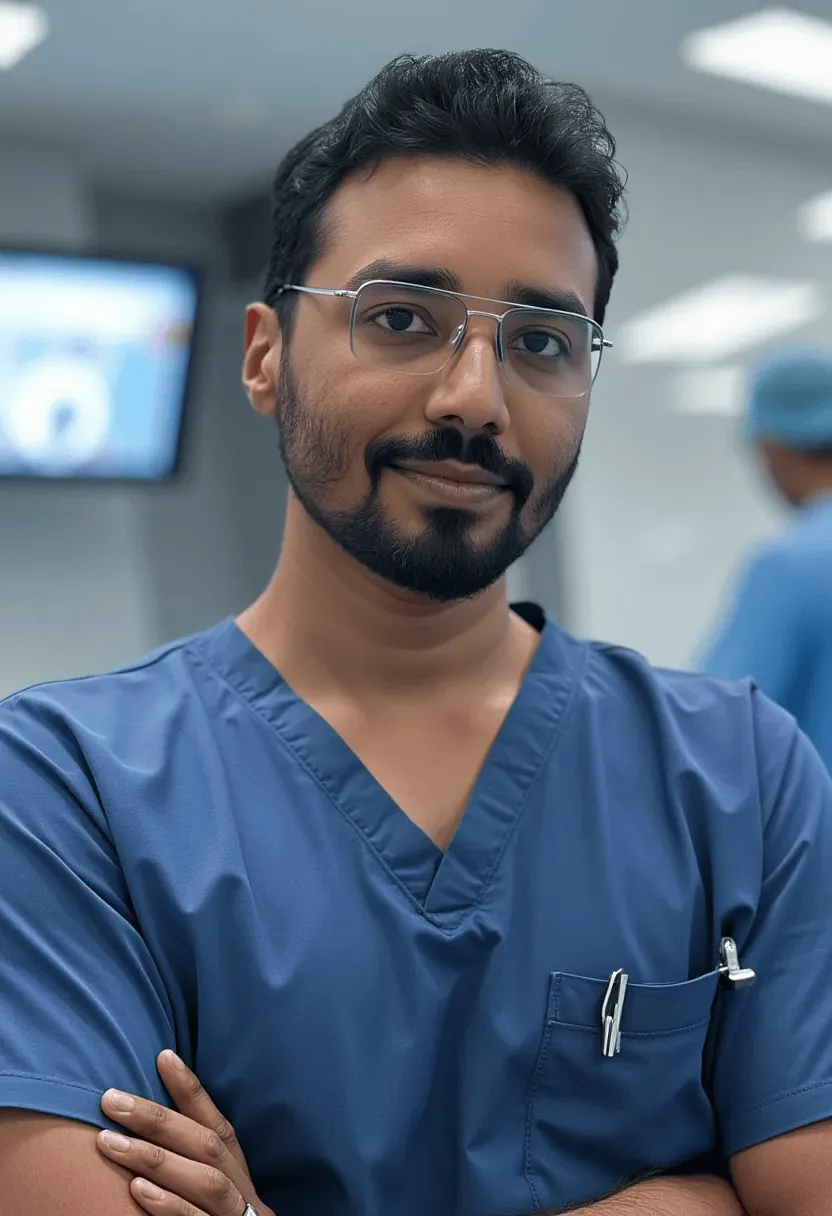
Orthopaedic surgery, practised as a precision discipline. Trained at India's national apex institute, examined by the UK Royal Colleges, published in the international literature. Consultant at Aster MIMS, Kannur.
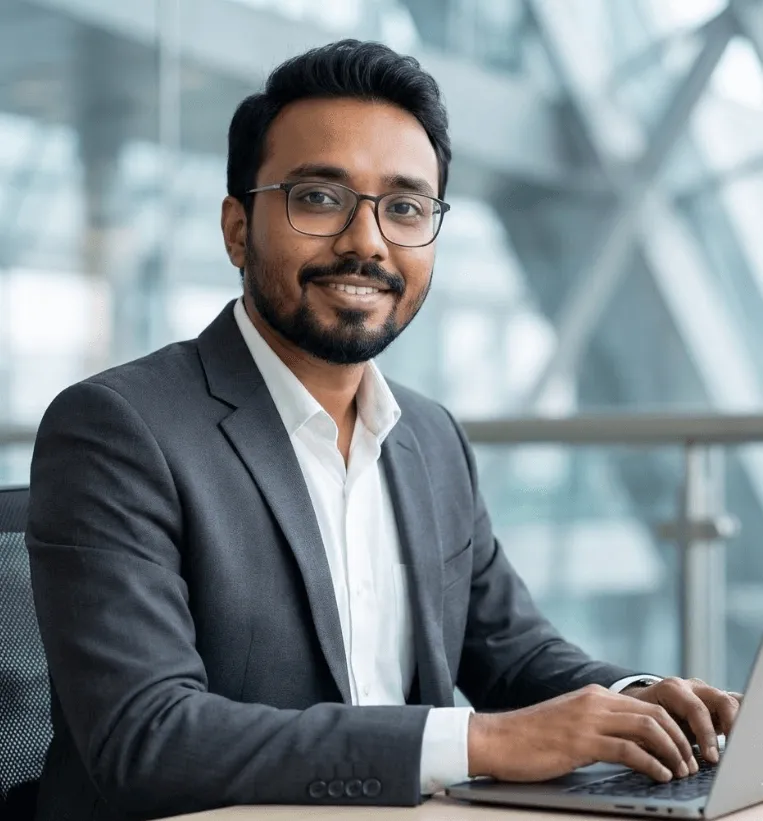
The hands came first.
Anatomy was learned by drawing it: structure traced until it was understood, form studied until it was familiar. Surgery was the natural destination for that habit of hand and eye, and orthopaedics its most exacting expression. It is the branch of medicine where geometry, load, and alignment decide how a person moves for the rest of their life.
The training was chosen to match. Foundations at Madras Medical College, one of India's oldest medical schools. Then six years at PGIMER Chandigarh, the national apex institute, where the country's most complex cases arrive for a final answer. At that altitude, every implant choice, every incision, and every rehabilitation protocol must be defended by data.
Away from the hospital, the same temperament holds: quiet, methodical, unhurried.
“The standard was never good enough for here. It was: what does the global evidence say is best?”
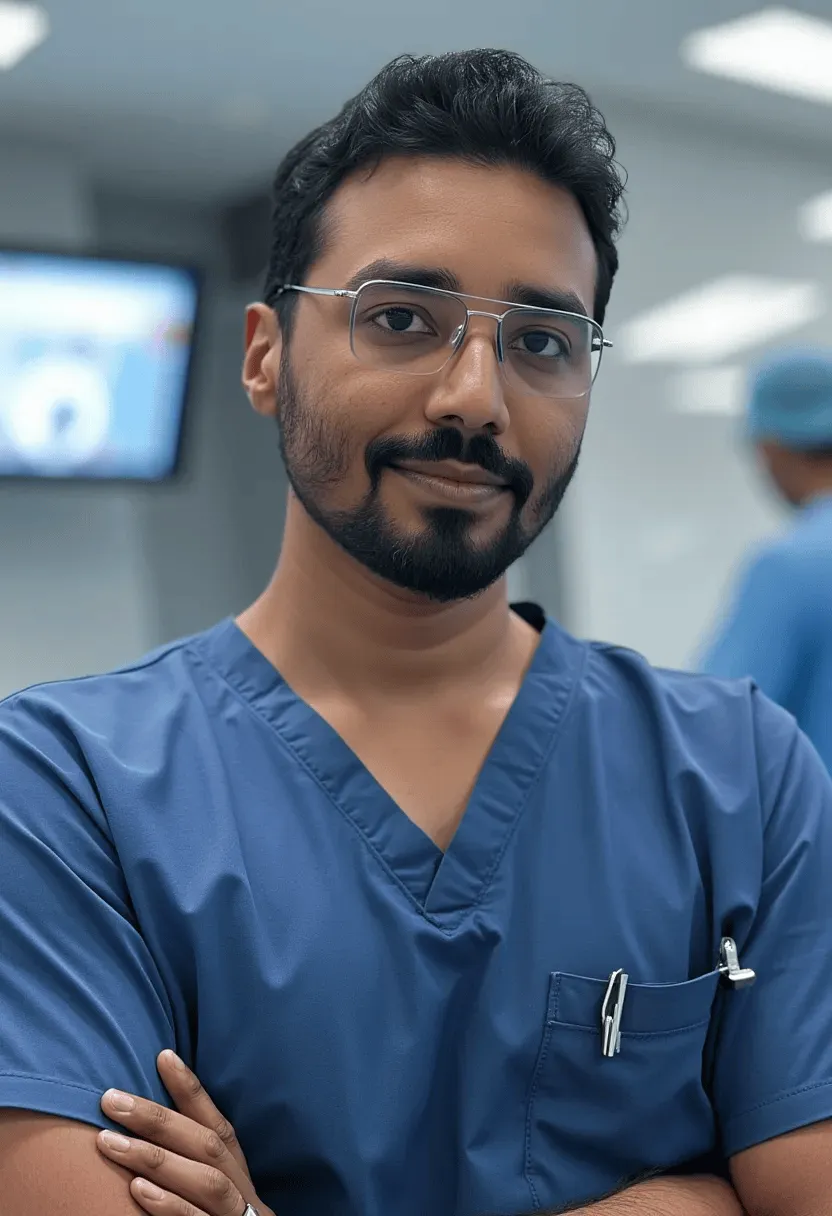
Formation, calibrated.
Five phases, measured in depth rather than dates.
Madras Medical College
One of India's oldest and most respected medical institutions. The foundational years shaped clinical instinct, ethical grounding, and the systematic approach to assessment that underpins every consultation today.
PGIMER Chandigarh
The country's final referral point for complex pathology. Daily high-energy trauma, high-volume arthroplasty, and revision reconstruction: the case exposure of an entire career, compressed, with every decision answerable to evidence.
The High-Complexity Spectrum
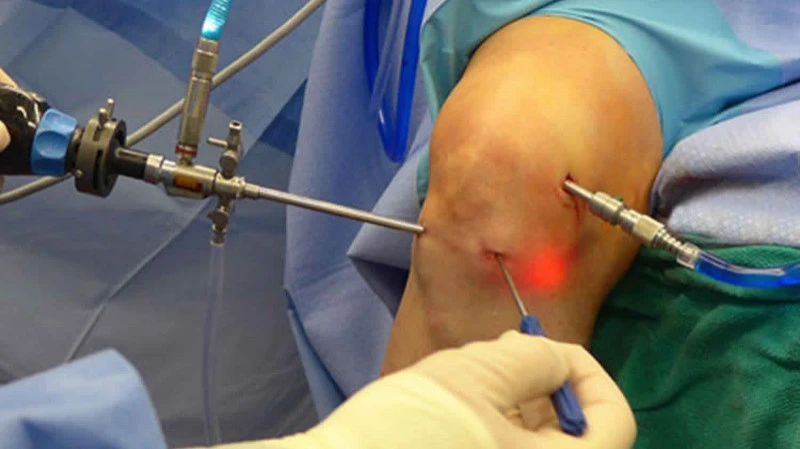
Clinical focus deepened toward the demanding end of the specialty: arthroscopic sports reconstruction, periarticular trauma, and complex nonunion. Cases that require both surgical precision and biological understanding.
MRCS (UK)
The UK Royal College examinations: structured clinical reasoning, global patient-safety protocols, and evidence-based discipline, tested and confirmed against the international standard of surgical practice.
Aster MIMS Kannur
North Kerala's tertiary referral centre, part of Aster DM Healthcare's network across South Asia and the Gulf. International standards, evidence-based protocols, and full reconstruction infrastructure, available to every patient in Malabar.
A practice, measured.
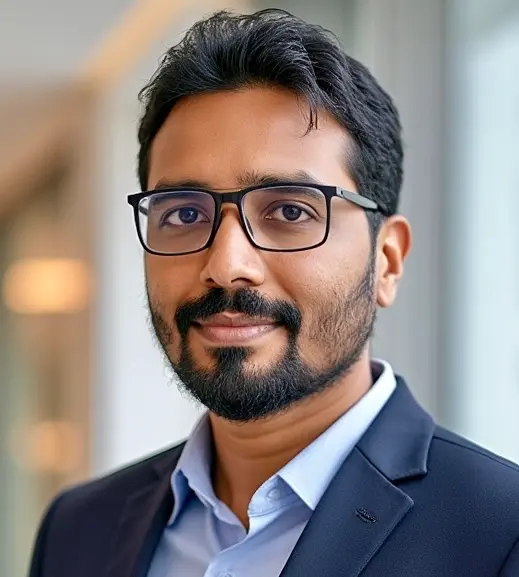
Research is not a sideline. It is the method.
Orthopaedics moves quickly; techniques that were standard five years ago are already obsolete. Reviewing for the Journal of Clinical Orthopaedics and publishing in the international literature keeps this practice at the leading edge: the evidence is evaluated first, then applied in theatre.
The record stands at thirty-plus peer-reviewed papers, cited more than 450 times by surgeons in over twenty countries. When your knee or hip is treated here, it draws on the collective intelligence of the global orthopaedic community.
NOTE: AN H-INDEX OF 13 MEANS THIRTEEN PAPERS CITED AT LEAST THIRTEEN TIMES EACH. A MEASURE OF SUSTAINED IMPACT, NOT VOLUME.
Robotic total hip arthroplasty, a meta-analysis
Postgraduate Medical Journal. Robotic assistance measurably improves implant positioning accuracy over manual technique.
Artificial intelligence and machine learning in orthopaedics
World Journal of Orthopedics. How AI algorithms detect fractures and classify arthritis: a map of digital diagnostics.
Ankle sprains, an evidence review
Foot and Ankle Clinics of North America. Early movement and balance training outperform immobilisation.
Quadriceps tendon ACL reconstruction in children
Journal of Orthopaedics. Quadriceps grafts show lower re-rupture rates and better function scores in young patients.
Robotic pedicle screws in spine surgery
Current Orthopaedic Practice. Robotic guidance achieves superior screw accuracy with fewer nerve complications.
Three operating principles.
Evidence before opinion.
Every treatment plan is answerable to the current literature, not to habit. When the global evidence changes, this practice changes with it.
THE PUBLISHED RECORDThe case against surgery.
Many consultations end without an operation. If the evidence favours waiting, you will hear it plainly, with the reasoning shown. More time is spent explaining why surgery is not needed than persuading anyone it is.
REQUEST A SECOND OPINIONPlanned twice, performed once.
Pre-operative templating is mandatory; complex reconstruction is planned in 3D. The operation is executed in the mind before the skin is opened, because improvisation is not a surgical technique.
THE CLINICAL SCOPEThe surgical index.
Explore the areas of practice and what each service involves.
Robotic Knee Replacement
CORI robotic system, sub-millimetre bone mapping, CT-free planning.
Hip Replacement
Primary and revision arthroplasty, implants with 15 to 20 year survivorship data.
Sports Medicine & Arthroscopy
ACL reconstruction with published research on graft outcomes, meniscus repair, ankle arthroscopy.
Shoulder Surgery
Rotator cuff repair, Bankart and Latarjet stabilisation, frozen shoulder release.
Complex Trauma
Pelvic and acetabular fractures, polytrauma, 24/7 emergency response.
Revision Joint Replacement
Failed, loosened, or infected implants; staged protocols and 3D-planned reconstruction.
Bone & Soft Tissue Tumours
Benign tumours, giant cell tumour, metastases and sarcomas, including pelvic tumour resections at Aster MIMS Kannur.
The deliberate return.
The training argued for a metro practice or a post abroad. The conviction argued otherwise: apex-standard orthopaedics should be available where it is needed, not only where it is concentrated. Kerala is home, and Malabar deserved the same standard of care as any capital city.
Aster MIMS Kannur made that possible. North Kerala's tertiary referral centre, part of Aster DM Healthcare, serving patients from Kasaragod to Wayanad and across the Malabar coast, with the theatres, imaging, and intensive care that complex reconstruction demands.
This page is for informational purposes and does not constitute medical advice. For personalised consultation, book an appointment at Aster MIMS Kannur.