"Doctor, the robotic one costs more. Is it actually better, or am I just paying for the machine?" I hear this question almost every week in my clinic at Aster MIMS Hospital, Kannur. It is a fair, intelligent question, and it deserves a straight answer rather than a sales pitch.
So here is my honest surgeon's view. Robotic knee replacement does generally cost more than conventional, manual knee replacement. That part is simply true. The harder question is whether the extra cost buys you a genuinely better outcome, or whether it buys you something more subtle. To answer it properly, we need to separate what you are paying extra for from what the published evidence has actually proven.
Why robotic surgery costs more
The price premium is not arbitrary. There are real, identifiable reasons a robotic procedure tends to be priced higher than a manual one. I will not quote you a rupee figure here, because the exact amount depends on the hospital, the implant and your individual case, and anyone who quotes a precise national "robotic price" is guessing. But it is worth understanding what drives the cost.
The system itself
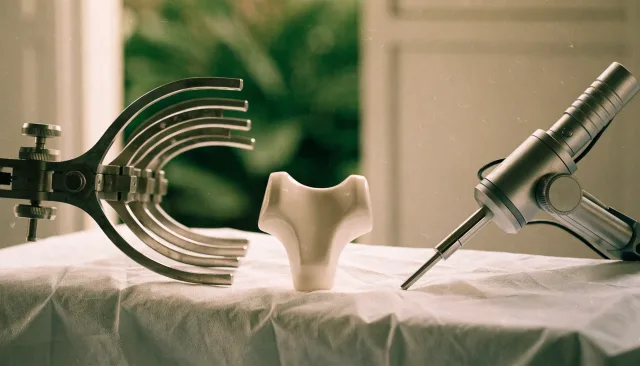
Robotic platforms are expensive capital equipment that the hospital invests in and maintains.
Per-case consumables
Each operation uses trackers and dedicated single-use instruments that add a real cost per patient.
Longer theatre time
Robotic cases take longer in the operating theatre, on average around 20 minutes more in the trials.
None of those costs, on their own, guarantee you a better-feeling knee five years from now. They pay for a tool and for the time to use it carefully. So the real value question becomes: what does that tool reliably deliver?
What the evidence actually proves
This is where I want to be completely honest, because the brand of my clinic is honesty, not hype. The high-quality evidence, meta-analyses of randomised controlled trials, points in one clear direction and is quiet in another.
What is proven: robotic assistance improves the accuracy and consistency of implant alignment, and it sharply reduces the number of knees that end up positioned far from the target. What is not yet proven: that this precision translates into noticeably less pain, better function or higher satisfaction in the first few years compared with a well-done manual operation. In the trials, those patient-reported outcomes have been broadly similar.
What the meta-analyses show
Pooled randomised-trial data, robotic versus conventional total knee replacement
RR 0.33 to 0.43
Relative risk of an alignment outlier with robotics, meaning far fewer knees end up off-target. A clear, repeatable win.
Proven benefit≈ 0.9° closer
Less deviation from neutral mechanical alignment (about 0.93 to 0.94 degrees), so positioning is more consistent.
Proven benefitNo clear gain
WOMAC, Oxford Knee Score and range of motion were not significantly different between robotic and manual surgery.
Similar so farSimilar
Revision and major complication rates were comparable. Robotics also tended to reduce blood loss in some studies.
Similar so farIn the largest pooled analyses, the radiographic accuracy was genuinely better with robotics, but the authors themselves note this may not always be clinically meaningful in the short term. One large review did find a better functional score at final follow-up, and another found a slightly higher knee-function score, but the dominant, consistent signal across the evidence is precision rather than a dramatic outcome leap.
The honest part
If a surgeon tells you a robot guarantees a better, faster-healing knee, they are ahead of the evidence. What it reliably gives is consistency. Whether that consistency means your knee lasts longer is a long-term question the data has not yet answered.
What you pay extra for, versus what is proven
I find it helps patients to see this side by side. On the left is what the premium buys. On the right is what the published trials have actually demonstrated so far.
What you pay extra for
- Access to the robotic system and its maintenance
- Single-use trackers and dedicated instruments for your case
- Extra operating-theatre time per procedure
- Software-guided, patient-specific planning during surgery
What is actually proven
- More accurate, more consistent implant alignment
- Far fewer alignment outliers (knees off-target)
- Sometimes less blood loss
- Short to medium term pain, function and satisfaction so far similar to manual surgery
Read those two columns together and the value question stops being "robot good, manual bad" and becomes something more grown-up: am I paying a premium for precision and consistency that I value, knowing the early outcome scores look similar either way? For some patients the answer is a clear yes. For others, a skilled manual knee replacement is an entirely sound and excellent choice.
So, is it worth it for you?
This is genuinely individual, and that is not a cop-out. A few honest considerations help most patients in North Kerala decide.
Precision matters more in some knees than others. In partial (unicompartmental) knee replacement, for example, the alignment margins are tight, and robotics has shown not only better alignment but also a better Oxford Knee Score in pooled data. If your situation calls for that kind of accuracy, the case for paying more is stronger. For a straightforward total replacement in fit hands, a well-aligned manual result can be excellent, and the robot is then buying consistency rather than a different destination.
Your budget and your peace of mind are legitimate parts of the decision. If the premium is comfortable for you and the idea of computer-assisted, patient-specific positioning gives you confidence, that confidence has real value. If the premium would be a genuine stretch, you should know that choosing manual surgery is not choosing a worse knee. I will never push a patient toward the more expensive option to upgrade a brochure.
The honest bottom line: robotic knee replacement reliably buys you precision and consistency, not a guaranteed better-feeling knee. Whether that precision is worth the premium is a personal decision, and it should be made with the real evidence in front of you, not the marketing.
How we approach the decision at Aster MIMS Kannur
At Aster MIMS Hospital, Kannur, we use the Smith and Nephew CORI image-free robotics-assisted system. Because it is imageless, it does not need a pre-operative CT scan, so there is nothing extra to schedule beforehand and no additional CT radiation, which patients across the Malabar region, including Thalassery, Payyannur, Taliparamba, Mattannur and Iritty, often find practically convenient. NRI patients deciding their surgery from the Gulf appreciate the same simplicity.
When you come to clinic, I will look at your specific knee, your alignment, your activity goals and your budget, and I will tell you plainly whether I think robotic assistance adds meaningful value in your case or whether a manual replacement serves you just as well. If you want the full background first, our complete guide to robotic knee replacement and the robotic knee replacement procedure page explain how the technology works in more detail. When you are ready, you can book a consultation at Aster MIMS Kannur to talk it through.
Dr. Vishnu Baburaj is a consultant orthopaedic surgeon (M.S. Orthopedics, PGIMER Chandigarh; MRCS, UK) at Aster MIMS Hospital, Kannur. The aim of this article is to help you make a clear-eyed value decision, not to sell you the more expensive option.