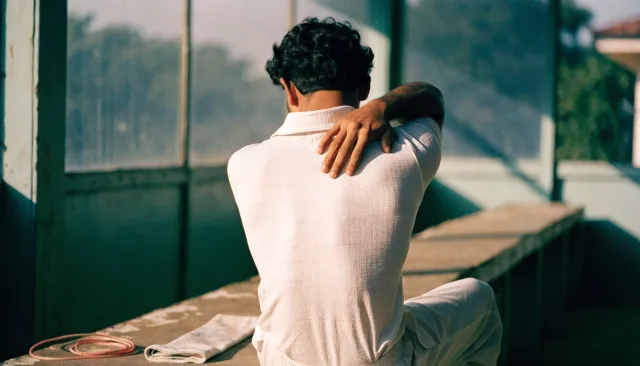
Shoulder pain that sits deep inside the joint, clicks when you move, and drains the power out of a throw is one of the more frustrating problems I see. People can usually point to a sore knee or a stiff neck. A labral tear is harder to locate, and that is exactly what makes it confusing. This guide explains what the labrum is, what a SLAP tear means, how it shows up, and how I decide on treatment at Aster MIMS Hospital, Kannur.
What is the labrum, and what is a SLAP tear?
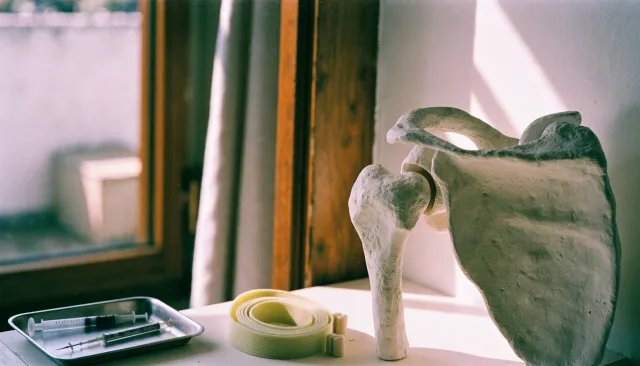
The shoulder is a ball-and-socket joint, but the socket is shallow, more like a saucer than a cup. That shallowness gives the shoulder its huge range of movement, and it is also why the shoulder relies so heavily on soft tissues for stability. The labrum is a rim of firm cartilage around the edge of the socket. It deepens the socket, helps hold the ball centred, and acts as an anchor point for ligaments and for the long head of the biceps tendon at the very top.
A SLAP tear is a tear of that upper part of the labrum. SLAP stands for Superior Labrum Anterior to Posterior, which simply means a tear running across the top of the rim, from front to back, often involving the spot where the biceps tendon attaches. Tears can also happen at the front or bottom of the labrum, where they are more often linked to shoulder dislocations and instability.
A labral tear is not one fixed problem. What it means for you depends on where the tear sits, whether it is a fresh injury or a worn, degenerate change, and how much you ask of the shoulder.
How does a SLAP tear happen?
SLAP and labral tears tend to arrive in one of two ways. The first is a single injury: a fall onto an outstretched hand, a sudden yank on the arm, or a heavy collision. The second, and the one I see often in sportspeople, is repetitive overhead loading. Years of bowling, throwing, serving, or overhead lifting can gradually wear and lever the upper labrum until it gives way. With age, the labrum also softens and frays naturally, which is why scans in older shoulders frequently show labral changes that were never the cause of any pain.
Symptoms: what a labral tear actually feels like
There is no single giveaway symptom, but a cluster of features should raise suspicion. Run through this checklist and note how many sound like your shoulder.
Symptom checklist
- Deep shoulder pain that is hard to point to with one finger.
- Clicking, catching, or a popping sensation inside the joint.
- Pain with overhead and throwing actions: serving, bowling, reaching up.
- Loss of throwing or bowling power, a "dead arm" feeling after effort.
- A sense that the shoulder might slip, give way, or feel unstable.
- Pain that is worse at the back of the swing or when the arm is cocked.
None of these is unique to a labral tear. They overlap heavily with rotator cuff problems and with shoulder instability, which is why a scan alone never tells the whole story. If this pattern sounds familiar, it is worth getting properly assessed rather than self-diagnosing from a search result.
How is it diagnosed?
Diagnosis is a layered process. It starts with your history, when the trouble began, what aggravates it, and what your shoulder has to do for work or sport. Next is a clinical examination using specific tests that stress the labrum and biceps anchor to reproduce the pain or clicking. Imaging then adds detail. A plain MRI is useful, and an MR arthrogram, where contrast dye is injected into the joint first, shows the labrum more clearly. Even with a good scan, the most reliable confirmation often comes during shoulder arthroscopy, when the labrum and biceps attachment can be seen and gently probed directly through a keyhole camera.
The honest part
Labral changes show up on scans in plenty of shoulders that feel fine. Finding a tear on an MRI does not automatically mean it is the source of your pain, and it does not automatically mean you need surgery. The decision rests on the whole picture, not the report.
Treatment: it depends on your age and your activity
This is the part that gets oversimplified. There is no single right answer for a labral tear, because the right answer changes with who you are and what you need the shoulder to do. Broadly, treatment falls into three paths, and choosing well between them matters more than the technical detail of any one operation.
Repair, debridement, or non-surgical care?
Here is how the three main paths line up. These are general patterns, not rules, and your own plan is decided after a proper assessment.
Matching the treatment to the patient
Qualitative patterns, individualised in clinic
Non-surgical first
Often the starting point for partial or degenerate tears, and for many patients regardless of age. Structured physiotherapy rebuilds the rotator cuff and shoulder blade muscles to take load off the labrum.
Frequently tried firstArthroscopic repair
Often chosen for younger throwing athletes with a genuine, mechanically significant tear who need the labrum and biceps anchor reattached to meet high overhead demand.
Young, high-demandDebridement
A keyhole clean-up, trimming the frayed, unstable portion of labrum. Frequently preferred for older patients or degenerate tears where a full repair offers little extra and recovers more slowly.
Older, degenerateBiceps tenodesis
When the biceps anchor is the real pain source, the tendon is released from the torn labrum and re-fixed lower down. Frequently preferred in older patients over repairing a worn anchor.
Older, biceps-driven painA simple clean-up recovers faster than a repair. Where the labrum is reattached, the shoulder is protected in a sling for a few weeks, with movement and strength rebuilt in stages over months.
The thread running through all of this is that a younger thrower and an older recreational player can have a similar-looking tear on the scan and still need quite different treatment. Age, the quality of the tissue, and how much the shoulder is asked to do all push the decision in different directions. That is why I spend time on the assessment rather than rushing to label the operation.
What recovery looks like
For a debridement or clean-up, recovery is relatively quick, with early movement and a staged return to activity. For a repair, the shoulder is rested in a sling for a few weeks to let the labrum heal back onto the bone, with gentle finger and elbow movement allowed early. Physiotherapy then progresses in stages over months, restoring movement first, then strength, then sport-specific loading before any return to throwing or bowling. Patience pays off here. Rushing a repair back into overhead sport is the surest way to undo it.
If you have been told you have a labral or SLAP tear and you are unsure whether surgery is really the answer, a careful second opinion can be reassuring either way. And if you would like to be assessed in person, you can book a consultation at my clinic at Aster MIMS Kannur.