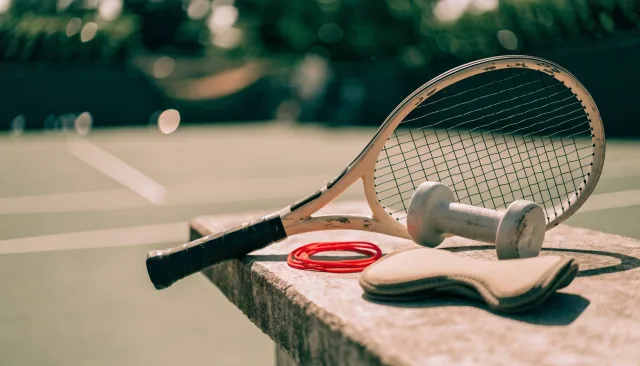
Most people who walk into my clinic at Aster MIMS Kannur with tennis elbow have never held a tennis racquet. They are gardeners, cooks, carpenters, masons, people who carry shopping or lift children, and office workers whose forearms have quietly been overworked for months. The name is misleading. What they share is not a sport but a pattern: pain on the outer side of the elbow that flares when they grip, lift, twist a tap, wring a cloth, or shake hands.
Tennis elbow, properly called lateral epicondylitis, is one of the most common elbow complaints I see. It is also one of the most over-treated, because the temptation to reach for a quick fix is so strong, and because the treatment that actually works is the one that asks the most patience. So let me lay out, honestly, what helps and what tends to disappoint.
What tennis elbow actually is
On the outer side of your elbow there is a bony bump called the lateral epicondyle. The tendons that straighten your wrist and fingers anchor onto it. When those tendons are loaded repeatedly, more than they have been built up to handle, the tissue at that anchor point becomes irritated and starts to break down at a microscopic level. Despite the old "-itis" in the name, this is less a simple inflammation and more a problem of a tendon that has not coped with its workload. That distinction matters, because it explains why anti-inflammatory quick fixes so often fall short, and why rebuilding the tendon's capacity is the real cure.
The hallmark is tenderness right over that bony bump, and pain when you load the wrist and forearm. Lifting a kettle, opening a jar, or a firm handshake can be enough to make you wince. It usually comes on gradually rather than from a single injury, which is part of why people leave it so long before seeking help.
Tennis elbow is a tendon that has been asked to do more than it was built for. The cure is not to silence the pain, but to rebuild the tendon's capacity, and that takes load and time.
What helps, and what disappoints
If there is one idea worth taking from this article, it is the difference between the treatments that change the course of the condition and the ones that only change how it feels this week. Here is how I sort them across the desk.
What helps
- Load-based exercise. Gradual, progressive strengthening of the wrist and forearm, especially slow eccentric (lowering) movements.
- Activity modification. Adjusting how you grip and lift so the tendon is loaded without being constantly overloaded.
- Time and patience. The large majority of cases settle on their own timeline. Tendons remodel slowly.
- Simple symptom control. A counterforce brace, ice after activity, and short-term pain relief to help you keep exercising.
What disappoints
- Relying on steroid injections. Good short-term relief, but the evidence shows worse outcomes by three to six months.
- Complete rest alone. Shutting the arm down may calm it, but the pain often returns the moment you resume, because nothing was rebuilt.
- Chasing a fast cure. Stopping the exercises the week the pain eases, before the tendon has actually adapted.
- Rushing to surgery. An operation before a fair trial of loading and activity change is almost always premature.
Why I am cautious about steroid injections
This is the part that surprises people most, so it is worth being clear. A corticosteroid injection around the tendon can genuinely take the pain away, and quickly. If all you measured was how the elbow felt a few weeks later, the injection would look like a winner. The problem is what happens after that.
A 2024 systematic review and meta-analysis of randomised trials compared corticosteroid injection against another common treatment for tennis elbow. Corticosteroid injection came out ahead in the first month for pain, grip strength and function. But by three months and again at six months, the picture reversed: the injection group did worse. Both approaches were safe, with only mild side effects, so this is not about danger. It is about trajectory. The injection borrows relief from your future.
The evidence on steroid injection
Corticosteroid injection for tennis elbow, over time (meta-analysis of randomised trials, 2024)
Better at 1 month
Steroid injection gave better pain relief, grip strength and function in the short term. This is the relief people feel and remember.
Short-term winWorse at 3 to 6 months
By three and six months the injection group did worse than the comparison treatment. The early advantage did not last and reversed.
Long-term costSource: Zhang L, et al. Orthopaedic Surgery, 2024. Both treatments were safe with only mild side effects. Full citation below.
The honest part
I do not refuse injections outright. There are moments where a short window of relief is genuinely useful, for example to let someone get on top of a loading programme they simply cannot start because of pain. But an injection should be a considered, time-limited tool with eyes open to the trade-off, not the default first move. If it becomes the whole plan, it tends to leave people worse off than where they started.
The conservative care ladder I use
For almost everyone, treatment runs as a staircase, not a single step. You start at the bottom, give each stage a fair chance, and only climb if you genuinely need to. Most people get better well before the top.
Step by step, from first move to last resort
- 1Confirm the diagnosis. Make sure it really is tennis elbow and not another cause of outer-elbow pain. This is usually clinical, no scan needed.
- 2Modify the load. Identify the gripping, lifting and twisting that flare it, and adjust technique, tools or frequency. Relative rest, not total rest.
- 3Start loading exercises. Gradual, progressive wrist and forearm strengthening, with slow eccentric (lowering) work. This is the engine of recovery.
- 4Add simple support. A counterforce brace, ice after activity and short-term pain relief, used to keep you exercising, not to replace it.
- 5Give it real time. Reassess over months, not days. Most cases settle on this path without anything more.
- 6Consider surgery only if stuck. Reserved for the small number still genuinely disabled after a long, fair trial of all of the above.
Notice where the injection sits in that ladder: nowhere as a routine rung. It can occasionally slot in alongside step two or three to unlock a loading programme, but it is never the staircase itself.
When surgery comes into it
Surgery for tennis elbow is genuinely rare, and I want patients to hear that plainly so they do not arrive braced for an operation. The condition is, for the great majority, self-limiting with the right care. Surgery is considered only when the pain is still significantly disabling after a long and honest trial of conservative treatment, usually many months of proper loading exercise and activity modification, in someone whose life or work is being meaningfully held back. Even then, it is a conversation, not an inevitability.
If you are weighing what you have been told, or you have already been offered an injection or surgery and want to think it through, it is reasonable to ask for a careful look at the whole picture first. You are welcome to request a second opinion on your elbow before committing to anything irreversible.
The honest summary
Tennis elbow rewards the patient and frustrates the hasty. The things that genuinely work, loading the tendon, adjusting how you use the arm, and giving it time, are slow and unspectacular, which is exactly why people are tempted away from them. The things that disappoint, a steroid injection used as the whole plan or complete rest with no rebuilding, feel decisive in the moment and let you down later. If you hold your nerve and do the unglamorous work, the odds are very much on your side.