If you live in Kannur or the wider Malabar region and you have been told you need a knee replacement, you have probably also heard the word "robotic" by now. And the question that usually follows is a practical one: can I actually get this done near home, or do I have to travel?
The short answer is that you can have it done here. At my clinic at Aster MIMS Hospital, Kannur, I perform robotic-assisted knee replacement using the Smith and Nephew CORI system, serving patients across North Kerala. This article is not a sales pitch for the technology. It is a plain walk through what the journey actually looks like, from the first time you sit across from me in the consultation room to your follow-up months later, so you know exactly what to expect.
If you want the deeper explainer on how the technology works and who qualifies, I have written a fuller guide to robotic knee replacement at Aster MIMS Kannur. This piece stays focused on the patient journey.
Serving North Kerala and Malabar
Patients reach Aster MIMS Kannur comfortably from across the district and beyond. You do not need to relocate to Kochi or Bangalore for advanced robotic joint replacement.
Your journey at Aster MIMS Kannur, step by step
A knee replacement is a planned operation, and a good plan is reassuring. Here is the path most of my patients follow, from the first conversation to settled recovery.
Consultation and assessment
I examine your knee, review your X-rays, and talk through your symptoms, your daily life, and what you are hoping to get back. We confirm that arthritis is genuinely the source of your pain, not a hip or spine problem in disguise, and we discuss whether a knee replacement is the right step at all.
Planning and fitness for surgery
Because CORI is image-free, there is no separate CT scan to arrange. Your standard X-rays are enough. Our anaesthesia team checks your fitness for surgery, and if you have diabetes, blood pressure, or heart concerns, we optimise these first with the relevant specialists. We agree on a date and prepare you for what is coming.
The day of surgery
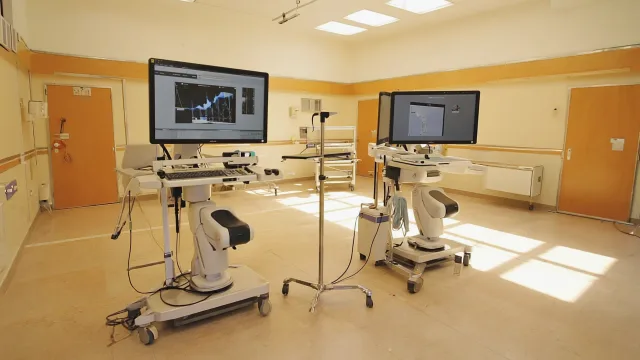
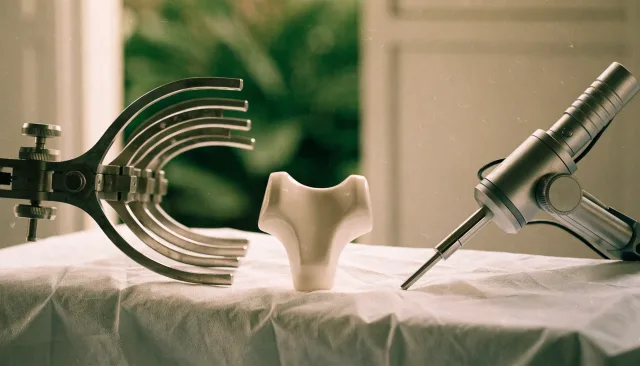
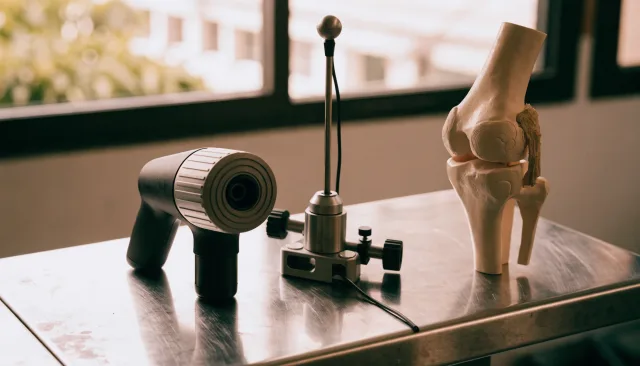
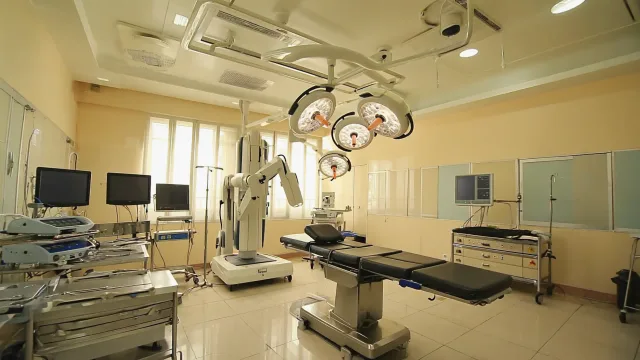
In the operating theatre, I map the surfaces of your own bone with the CORI handheld probe. The software builds a 3D model of your knee and assesses how the gaps behave through its range of motion. I then prepare the bone and position the implant under the system's guidance, using a surgeon-controlled handpiece. I remain in charge of every step; the robotics make the plan more precise.
The hospital stay
Pain control, often including a regional nerve block, keeps you comfortable. Physiotherapy starts early, usually within a day, with gentle bending and safe, supported walking. Most patients are up on their feet with a walker soon after surgery. You stay with us for a few days while your mobility and pain control settle.
Early recovery and follow-up
You continue physiotherapy after you go home, building strength and range of motion week by week. Because you are local, your review appointments are easy to attend. We track your progress, adjust your rehabilitation, and answer the questions that always come up in the first weeks. Recovering near family, with your own routine around you, genuinely helps.
Why I use CORI: image-free and precise
CORI is a handheld, image-free robotics-assisted system from Smith and Nephew. The practical advantages for you, before and during surgery, are worth understanding.
No pre-op CT scan
CORI maps your knee during surgery, not from a scan booked weeks earlier. That means no extra radiation, no separate appointment, and nothing to schedule before your operation.
Patient-specific plan
The 3D model is built from your own bone landmarks and tested through your knee's actual movement, so the implant position is tailored to you rather than to an average.
Surgeon-controlled
I control the handpiece throughout. The system guides me within the plan and reduces positioning errors compared with conventional instruments, but the decisions remain mine.
Consistent alignment
Across published trials, robotic assistance reliably reduces alignment outliers. The clearest proven benefit of this technology is precision and consistency.
The honest part
I want to be straight with you. The strongest evidence for robotics is about precision: more accurate alignment, fewer outliers, and in some studies a little less blood loss, at the cost of slightly longer operating time. So far, short to medium term pain, function, and satisfaction look broadly similar to a well-done conventional knee replacement, and complication rates are comparable. Long-term advantage is still being studied. Robotics tightens consistency; it does not turn an ordinary result into a miracle.
What to expect at each stage
A few honest expectations help recovery go more smoothly. Here is the short version of what each phase actually feels like.
Before surgery
A clear assessment, no surprise scans with CORI, and time to ask everything you want answered. We optimise any medical conditions first.
Surgery day
Usually spinal anaesthesia, so you feel nothing below the waist. You do not interact with the system; that is my job. The operation is over before you know it.
In hospital
The first couple of days are about pain control and getting moving. A swollen, stiff knee is normal and expected. Early walking with support is a good sign, not a risk.
Back home
Steady physiotherapy is the real engine of recovery. Progress is week by week, not day by day. Living locally makes follow-up appointments simple to keep.
If you want a detailed, day-by-day account of the early weeks, my guide on your first week after total knee replacement walks through pain, walking, and home setup. And if you are still weighing whether to have surgery at all, the broader knee replacement overview explains candidacy and the procedure in general terms.
You can stay close to home
For years, families in Kannur and across Malabar assumed that anything described as "robotic" meant a long, expensive trip to a big city, with elderly parents recovering far from home. That is simply no longer true. Aster MIMS Kannur has the technology, the implants, and the surgical and rehabilitation team to deliver robotic knee replacement to the standard you would expect at any major centre.
The biggest practical advantage of having this done in Kannur is not the robot at all. It is recovering where you belong, with your own people around you, and a follow-up appointment that is a short drive away rather than a flight.
If you would value a careful, unhurried opinion before deciding anything, you are welcome to request a second opinion on your knee. Come with your X-rays and your questions. The consultation exists so you can make an informed choice, not a rushed one.