The first thing patients ask me after keyhole shoulder surgery is "when will I be back to normal?" It is a fair question, and I never give a single number. The honest answer is that your recovery is decided less by the small incisions on the skin and more by what we did underneath them.
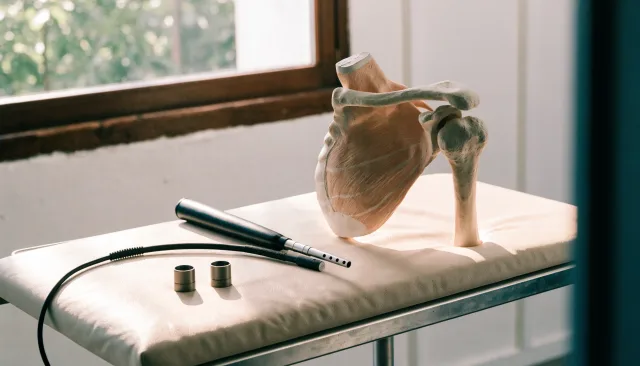
Shoulder arthroscopy is a family of operations, not a single procedure. Through a few small portals, I can look inside the joint, clear away inflamed or frayed tissue, free up tight structures, or stitch a torn tendon or labrum back into place. Those are very different jobs, and they heal on very different clocks. So before any timeline makes sense, you need to know which broad category your surgery falls into.
The single biggest factor: clean-up versus repair
Here is the distinction that matters more than anything else in this article. If your operation was mainly a clean-up, removing damaged tissue, smoothing a frayed surface, or making more space under the bone (subacromial decompression), there is nothing inside that has to knit back together. Your recovery is paced by comfort and by settling inflammation, which is usually quicker.
If your operation was a repair, where a torn rotator cuff tendon or a labrum is stitched back onto bone, biology sets the pace. That tissue needs weeks of protection to heal to the bone before it can take load. Push it too early and the repair can fail, which is the one outcome we work hardest to avoid.
Clean-up (faster)
Debridement, decompression, diagnostic
- Little or no tissue needs to heal to bone
- Short sling use, mostly for comfort
- Movement encouraged early
- Paced by pain and inflammation settling
Repair (slower, protected)
Rotator cuff or labral repair
- Tissue must heal back onto bone
- Sling worn for weeks to protect the repair
- Early motion is passive and carefully limited
- Strengthening is delayed until healing is secure
If you remember one thing, remember this: a clean-up recovers on your comfort's schedule, but a repair recovers on biology's schedule, and biology does not negotiate.
Whether the technique was all-arthroscopic or a small mini-open approach makes surprisingly little difference to the end result. For rotator cuff repair, studies comparing the two have found no meaningful difference in function, pain, re-tear rate or range of motion (Migliorini et al., The Surgeon, 2021). What matters for your recovery is that a tendon was repaired, not the size of the incision used to do it.
A week-by-week guide to the phases
Use these phases as a map, not a rulebook. The clean-up timeline runs at the faster end and the repair timeline at the more protected end. Your written protocol is the version that counts.
The first days: protect and control pain
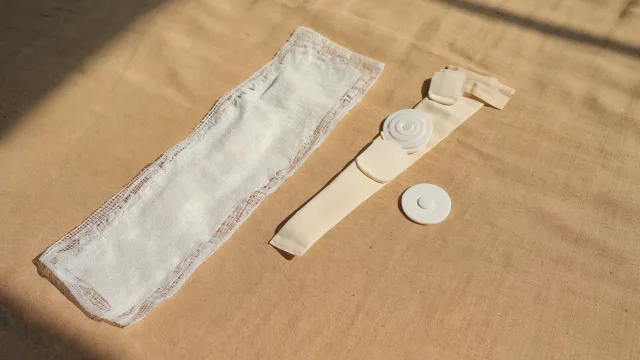
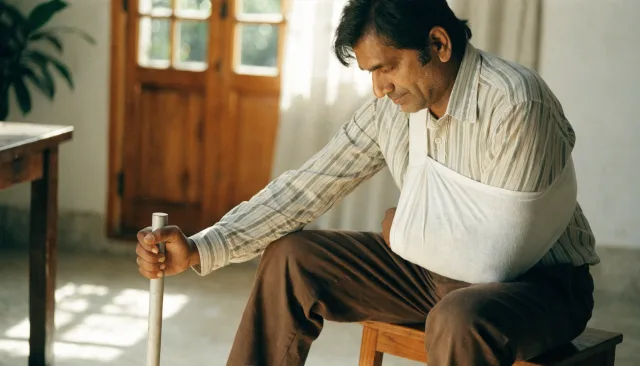
You go home in a sling, often the same day or after a short stay. The priorities are pain control, keeping the dressings clean and dry, and starting gentle finger, wrist and elbow movements straight away so the rest of the arm does not stiffen. The shoulder itself rests. Some ache, bruising and disturbed sleep are normal in this window.
Early weeks: passive and assisted motion
Physiotherapy begins with gentle passive movement, where the therapist or your other hand moves the shoulder rather than your own shoulder muscles. After a repair, this stage is deliberately limited to protect the stitched tissue, and the sling stays on for weeks. After a clean-up, you progress through this stage faster and lose the sling sooner.
Mid recovery: active motion and early strengthening
Once your surgeon is confident any repair is secure, you start moving the shoulder using your own muscles (active motion), then begin gradual, graded strengthening with your physiotherapist. This is where range and confidence really return. It is also where patience pays off: loading too aggressively at this stage is a common way to stall progress.
Later phase: full strength and return to activity
In the final phase you rebuild full strength, endurance and overhead control, and gradually return to demanding tasks, heavy lifting and sport. For a repair this phase extends over months, not weeks. The shoulder can keep getting stronger well after you feel "back to normal", which is why the final clearances are graded rather than given all at once.
The honest part
There is no prize for finishing rehabilitation early. After a repair, the tendon or labrum is at its most vulnerable in the very weeks you start to feel good and want to do more. Trust the protocol over how the shoulder feels, because feeling fine and being fully healed are not the same thing.
Returning to work, driving, lifting and sport
These are the milestones people actually plan their lives around. The timings below are deliberately qualitative, because they shift with your procedure, your job, your dominant arm and how rehabilitation is going. Earlier ranges suit a clean-up; later ranges suit a repair.
Desk work
Often the earliest return, sometimes within the first week or two if pain is controlled and you can work comfortably one-handed in the sling.
Driving
Only once you are out of the sling, off drowsy medication and can control the car safely. Early after a clean-up, several weeks after a repair.
Lifting
Reintroduced gradually as strength returns. Heavy and overhead lifting comes late, especially after a repair, and only once cleared.
Sport
The last milestone, particularly throwing, contact and overhead sport. This is months away after a repair and is cleared in stages.
If you are weighing up whether surgery is even the right path for your shoulder, that decision deserves its own careful conversation. For rotator cuff problems in particular, surgery is not always the better option, and I have written separately about when a rotator cuff tear needs surgery and when it does not.
How to give yourself the best recovery
The patients who do best are rarely the ones who push hardest. They are the ones who follow their protocol closely, attend physiotherapy consistently, manage their pain well enough to sleep and move, and call early if something does not feel right. Smoking and poorly controlled diabetes both slow tissue healing, so the weeks around surgery are a good time to address them.
Above all, talk to your own surgeon and physiotherapist about your specific operation. A general timeline is useful for setting expectations, but only your protocol knows exactly what was repaired and how much it can take. If you would like to discuss shoulder arthroscopy or your recovery in person, you can book a consultation with our clinical team at Aster MIMS Hospital, Kannur.