On this page
Discharge and flight readiness are separate
Discharge confirms that you can continue recovery outside hospital. It does not test whether you can manage airport distances, security queues, several transfers and hours in a fixed seat.
Recent surgery and reduced mobility both affect venous thromboembolism risk. The evidence does not provide one safe flight day for every patient. [1]
What operation was actually performed?
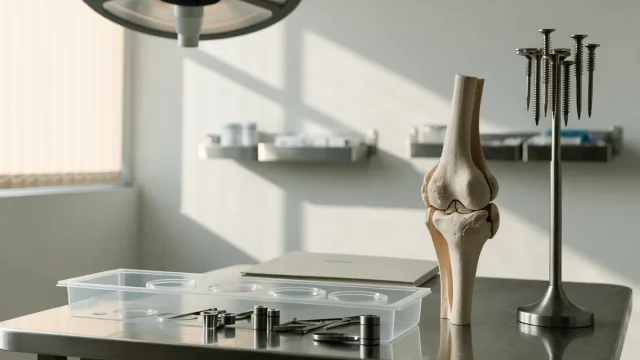
Arthroscopy describes using a camera through small incisions. It can include very different operations, from a limited procedure to ACL reconstruction with meniscus or cartilage repair. Small wounds do not establish how the tissues inside must be protected. [2]
An isolated ACL reconstruction may permit early weight bearing. Meniscus repair or cartilage work can add limits. The knee may need a brace, crutches or a restricted range. Those instructions take priority over a pre-booked itinerary.
The discharge summary should state the graft, fixation, associated procedures and exact loading instructions. A patient who was expecting “keyhole surgery” can otherwise reach the airport without realising that a repaired meniscus changes transfers and seating.
Why there is no universal evidence-based flight day
Travel guidance combines evidence about recent surgery, immobility and VTE with the practical realities of the operated leg. Research has not tested every ACL procedure, flight duration and patient-risk combination. A generic statement about uncomplicated keyhole surgery is not specific enough for ACL reconstruction with lower-limb swelling or restricted weight bearing.
For uncomplicated isolated ACL reconstruction, this practice uses 7 to 14 days as the first long-flight reassessment window. At that review, the wound, mobility, swelling and route determine whether departure is reasonable. Additional repairs or medical concerns can require longer.
What is checked before departure?
- The wound is dry and free of concerning redness or drainage
- Pain is controlled without unsafe sedation
- Swelling is manageable
- You can transfer, use the toilet and walk at planned intervals safely
- You can sit with the knee in the required position
- The medication and VTE plan is clear
- There are no symptoms suggesting DVT, PE or another complication
- Home physiotherapy and urgent local care have been arranged
Plan the airport, not just the aircraft
Request wheelchair or special assistance before travel. Choose enough connection time and avoid an itinerary that depends on running between gates. An aisle seat can make movement easier. A companion may be valuable for luggage, crutches and documents.
Ask the airline whether it needs a medical information form. Airline acceptance is not the same as surgical clearance, and a clinician's note does not force an airline to carry a passenger. [4]
Map the entire route
Count the drive to the airport, check-in, security, terminal transfers, connections and the journey after landing. A two-hour flight can still create a long day. Separate tickets and short connections leave little margin when the patient moves slowly.
Check whether stairs are used to board, whether a bus transfer is likely and whether assistance continues during a connection. The return ticket should be changeable because the reassessment can delay departure.
Brace, crutches and security
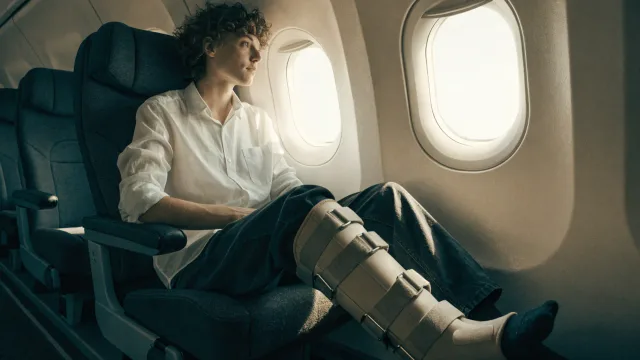
Tell the airline and assistance team about the brace and mobility aids. Allow extra time for security screening. Keep crutches available until seated and confirm how they will be stored. Do not remove a prescribed brace simply to make the journey easier.
A companion can manage luggage and documents while the patient focuses on safe transfers. Travelling alone may require a different assistance plan.
Medication and stockings
Take prescribed medicines exactly as directed. Do not add aspirin, an anticoagulant or an extra dose for travel. Compression stockings should be measured and used only when the treating team recommends them. General advice cannot account for bleeding risk, graft procedure and medical history. [1],[3]
Movement during the journey
When it is safe and permitted, change position, perform simple calf movements and walk at intervals. Keep essential medicine and records in hand luggage. Hydration is reasonable for comfort, but it should not be described as proven clot prevention. [1]
Do not carry or lift heavy cabin baggage with crutches. The companion or assistance team should manage luggage. Keep the operated leg protected from a trolley, suitcase or sudden turn in a crowded aisle.
Insurance and unexpected delay
Ordinary travel insurance may exclude planned surgery and its complications. Ask in writing about elective treatment, extended accommodation, changed flights and medical care during the return. A policy certificate without the relevant wording is not enough.
Keep a small financial and accommodation buffer. Swelling, a wound concern or an airline requirement can delay travel even when the operation itself was uncomplicated.
Prepare the handover before leaving
Your home physiotherapist should receive the operation note, graft, fixation, associated procedures and restrictions. The handover should identify the first local appointment and who can provide an examination after landing. Carry the discharge summary, medicine plan and emergency contacts.
The full fit-to-fly guide explains the general framework. The ACL cost guide helps budget for flexible accommodation and home rehabilitation.
Plan the first 48 hours at home
Arrange collection from the airport and avoid driving yourself. The home should already have a clear route to the bed and bathroom. Keep the local clinician, physiotherapist and emergency numbers available.
A long journey can temporarily increase discomfort and swelling. The treating team should explain the expected response and the symptoms that need assessment. New chest pain, breathlessness, marked calf swelling, fever or wound drainage must not be dismissed as travel fatigue.
Documents for hand luggage
- Discharge summary and operation note
- Prescription and medicines in labelled packaging
- Graft, fixation and associated-procedure details
- Brace and weight-bearing instructions
- Airline medical form, when required
- Insurance contacts and policy wording
- Home clinician and physiotherapist details
Questions for the departure review
- Is the wound satisfactory?
- Is swelling within the expected range?
- Can I transfer and use the toilet safely?
- What movement is allowed during the journey?
- What is my prescribed medicine and VTE plan?
- Does the airline need a form?
- Who will see me after landing?
- Which symptoms mean I should not travel?