On this page
Who is more likely to consider reconstruction?
Reconstruction becomes more relevant when the knee repeatedly gives way, the athlete intends to return to pivoting sport, or a repairable meniscus or other injury affects the plan. Good prehabilitation helps settle swelling, restore extension and build strength before any operation.
Some people whose preferred activities do not involve pivoting can do well with rehabilitation-first care if the knee becomes functionally stable. Shared decision-making is better than treating the MRI alone. [1]
Prehabilitation provides useful information
Prehab aims to settle swelling, regain full extension, restore useful flexion and activate the quadriceps. It also shows how the knee behaves when strength and control improve. Persistent giving way despite good rehabilitation carries different weight from a knee that becomes stable in desired activities.
Surgery on a very swollen, stiff knee can make early recovery harder. The timing is based on the knee and associated injury, not a competition calendar alone. [1],[3]
Three common autograft choices
| Graft | Useful discussion points |
|---|---|
| Patellar tendon | Strong bone-to-bone fixation; anterior or kneeling pain can matter for some athletes |
| Hamstring | Avoids patellar-tendon harvest; hamstring strength and graft size enter the decision |
| Quadriceps tendon | Versatile graft size; quadriceps harvest and early strength recovery need discussion |
A systematic review of randomised trials comparing quadriceps grafts with hamstring or patellar-tendon grafts found no clear difference in graft failure or laxity, with broadly similar patient-reported outcomes and some donor-site differences. [5] The right choice is not a brand decision. It depends on anatomy, sport, previous surgery, kneeling demands and surgeon experience.
AAOS guidance generally favours autograft over allograft in young or active patients. Special circumstances can alter that choice. [2]
Protect the meniscus when possible
A meniscus tear may be repairable during ACL reconstruction. Preserving meniscal tissue can be valuable, but repair may change weight-bearing, bending and early rehabilitation. Cartilage procedures can create other restrictions. The written plan and price should identify these possibilities. [2]
Associated injuries change the sporting forecast
An isolated ACL reconstruction is different from surgery that also treats a root tear, complex meniscal damage, cartilage injury or another ligament. These findings may affect loading, running progression and the likelihood of returning to a particular level.
The plan should explain each associated injury and its effect on rehabilitation. A successful graft reconstruction cannot by itself restore every damaged part of the knee.
Match donor-site priorities to the athlete
An athlete who kneels frequently may weigh anterior knee symptoms differently. A sprinter may care about hamstring strength. A jumper may need a detailed discussion about quadriceps recovery. These are not absolute rules for selecting a graft. They are prompts for a decision that also includes graft size, previous harvest and surgeon familiarity.
Rehabilitation works in phases, not promises
Early work controls swelling, restores full extension, activates the quadriceps and normalises walking. Strength and movement tasks progress as the knee responds. Running begins only when symptoms, movement and strength support it. Sport training then rebuilds cutting, landing, acceleration and fatigue tolerance.
A rigid online calendar can be unsafe when a meniscus repair, cartilage procedure or delayed recovery changes the pace. [3]
Strength needs to be measured
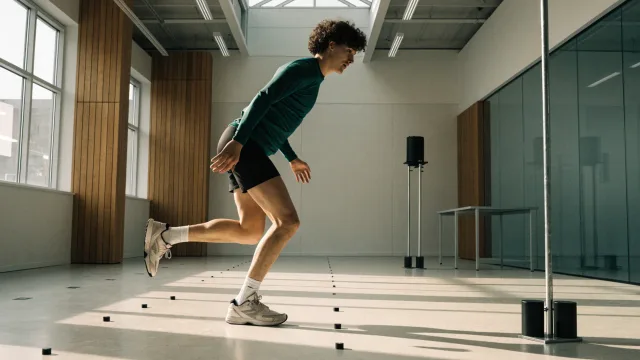
Visual inspection and ordinary gym weights do not describe strength accurately. Where possible, rehabilitation should include repeatable quadriceps and hamstring testing. Hop and landing tasks add information later, once the patient has earned the ability to perform them safely.
Symmetry is useful but can be misleading if the uninjured side also became weak. The therapist should consider absolute capacity, movement quality and the demands of the sport, not one percentage alone. [3]
Recovery outside the gym matters
Sleep, nutrition, study or work load and adherence affect how much training the athlete can absorb. Swelling or pain after a session is information. It may mean the load needs adjustment, not that the graft has failed.
Repeated setbacks deserve review. A fresh giving-way event, locked knee, marked swelling or sudden loss of function should be assessed rather than managed by simply reducing exercises online.
Return to sport is a decision process
Consensus guidance recommends combining time with objective and subjective criteria. These include little or no swelling, stable movement, strength measures, hop or task testing, sport-specific exposure and psychological readiness. [3]
Six months should not be treated as the normal point for unrestricted pivoting or contact sport. Plan around nine months or longer, while rebuilding strength, control, confidence and exposure to the demands of your sport. Guidance advises that return should rarely be earlier than nine months because of reinjury risk. Reaching that date is only one part of clearance. [6]
A 2025 review of 4,810 athletes after primary reconstruction with patellar-tendon or hamstring autografts found about 80% returned to some sport and about 55% to their preinjury level, at an average follow-up of 35.7 months. Pooled graft rerupture was 3.6%. These figures do not cover every graft, revision reconstruction or sporting setting. [4]
Rerupture means the graft tore again. It is not a count of every painful, unstable or disappointing knee, every second injury or every later operation. Nor does an average follow-up describe lifetime risk.
More about the evidence
Connors and colleagues combined 33 studies comparing bone-patellar tendon-bone and hamstring autografts after primary ACL reconstruction. They excluded quadriceps grafts, allografts and revision reconstruction. Reported return rates depend on how sport and preinjury level were defined; the pooled outcomes are not an individual forecast. [4]
The separate White review included 12 randomised trials with 636 patients, comparing quadriceps grafts with hamstring or bone-patellar tendon-bone autografts. Follow-up and outcome measures varied. It supports discussing viable graft options, not declaring that all grafts are interchangeable for every athlete. [5]
Return is also influenced by confidence, team selection, fitness, opportunity and personal choice. An athlete may have a stable knee but decide not to resume the same sport. Another may return to training before having enough capacity for competition. Both situations can affect reported statistics.
Returning to training is not the same as returning to competition
Straight-line running, non-contact practice, unrestricted team training and competition expose the knee to different demands. Progression should rebuild intensity, decision-making and fatigue tolerance. The athlete's knee must also respond well in the hours after each load.
A strong test day does not replace several weeks of successful sport exposure. Conversely, waiting for a date without restoring capacity does not make return safe. [3]
Making an international pathway work
Choose the home physiotherapist before travelling. Share the operative note, graft, fixation, meniscus or cartilage work and restrictions. Agree how strength testing and sport tasks will be measured. Video reviews can support decisions, while hands-on testing takes place locally.
The current planned ACL package range is USD 1,500 to 2,500. Read the international ACL cost guide before comparing estimates, and use the MRI checklist for a preliminary review.
Build the home team before travelling
The local physiotherapist should know the athlete's sport and have access to progressive strength work. Later phases need space and skill for running, jumping, cutting and reactive drills. If those facilities are unavailable, decide how they will be accessed before choosing surgery abroad.
Identify a local doctor for wounds, medication questions and new injuries. Remote surgical review can interpret progress reports and imaging, but it cannot provide urgent hands-on care.
Travel is an early rehabilitation event
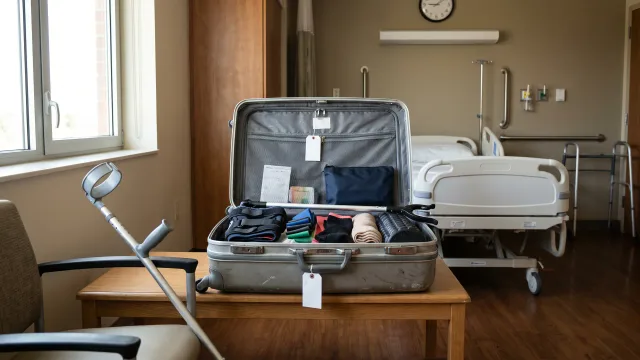
The usual admission is two days. For a flight longer than four hours, the first reassessment after an uncomplicated ACL procedure is generally 7 to 14 days. Meniscus repair, swelling, restricted weight bearing, medical risk and connections can extend the stay.
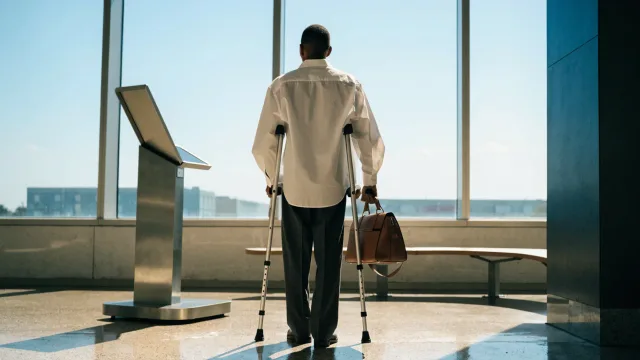
Airport assistance, a companion and flexible travel can protect the knee from an avoidable rush. The departure plan should not be based on the date an athlete hopes to start training.
Questions an athlete should bring
- What instability has been demonstrated?
- Can rehabilitation-first care meet my sporting goal?
- Which associated injuries need treatment?
- Why does the proposed graft suit my sport and donor-site priorities?
- What changes if the meniscus is repaired?
- Who will supervise rehabilitation after I return?
- Which strength and movement tests will be available?
- How will training exposure be documented before competition?