On this page
Plan follow-up before surgery
Follow-up starts before the journey. The operating team needs to understand what care is available near home, and the local clinician and physiotherapist need a usable handover. Where possible, agree who can provide that care before surgery.[3]
Tell the operating team what local care is available. A patient who lives far from imaging, wound care or physiotherapy may need a different discharge and return plan from someone with easy access.
What the practice can arrange
Follow-up is included and tailored to the operation and recovery. The team will explain what is needed before you return home.
For routine follow-up, use [email protected], WhatsApp +91 80008 85008 or the international patient form. Urgent symptoms need local care.
Your departure pack
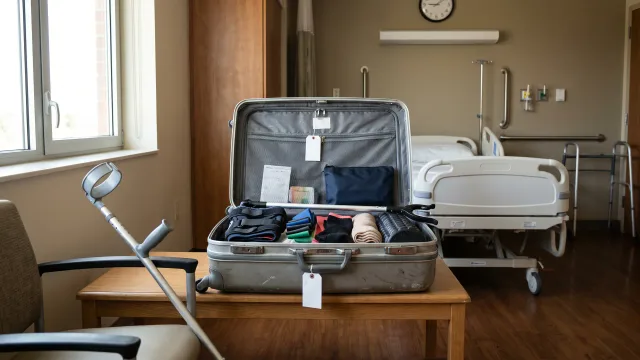
- Discharge summary and operation note
- Implant manufacturer, model, labels and lot details
- Postoperative imaging and relevant preoperative imaging
- Medication and VTE plan
- Wound instructions and warning signs
- Weight-bearing and movement restrictions
- Physiotherapy handover
- Individual review and imaging plan
- Routine contact route and emergency instructions
The team should help bring these records together and resolve missing documents. The discharge handover and therapist-update sheet gives both teams one place for restrictions, current function and the next agreed review.
Preparing for a video review
Write down the main change since the last review. Report pain, swelling, wound status, temperature if unwell, walking aid and current exercises. When requested, send a clear wound image through the approved route and a short update from the physiotherapist.
Locally obtained X-rays should be sent as DICOM files with the report when possible.
Follow-up should fit the operation
A primary replacement, ACL reconstruction and revision operation need different reviews. The plan follows the operation and your recovery, including any wound concern or restriction on movement or weight bearing.
A useful progress note is measurable
Include the walking aid, walking distance, need for help on stairs, pain pattern and change in swelling. The physiotherapist can report range of movement, strength work and any restriction that is limiting progress. After ACL reconstruction, the graft and associated meniscus procedure should always remain visible in the handover.
Imaging at home
The individual plan may request standing radiographs or another study at a later stage. Arrange them through a local clinician and send the full DICOM study plus the report. A photograph of a monitor is much less useful for comparison and measurement.
Use the same side and appropriate weight-bearing view when the plan requires comparison. If the local centre cannot perform the requested view, ask before substituting a different test. MRI and CT are not routine replacements for ordinary follow-up X-rays.
What video can and cannot do
Video is useful for conversation, record review and selected movement. It can support a decision to continue, adjust or arrange further assessment.[4]
A video call does not provide the hands-on examination or tests needed to exclude a serious complication. Concerning pain, swelling, wound change or loss of function needs in-person assessment rather than reassurance from the screen.[4]
Who is responsible for what?
| Person | Main role |
|---|---|
| Operating surgeon | Explains the operation, restrictions and planned surgical follow-up |
| Local doctor | Examines medical and wound concerns and arranges urgent tests or treatment |
| Home physiotherapist | Provides hands-on rehabilitation and objective progress measures |
| Patient and family | Follow instructions, keep records and use the correct urgent-care route |
Medicines need local continuity too
Return with a clear medicine list, duration and indication. Confirm which clinician will handle refills, side effects and interaction questions after landing. Do not wait for an international message if bleeding, allergy or severe illness is suspected.
When the local doctor changes a medicine, record the name, dose, date and reason. Share the updated list at the next planned surgical review.
Routine questions and urgent symptoms need different routes
For a routine update, one concise message through the agreed route keeps the history together. Urgent symptoms need local care while the surgical team is contacted. The new-problem guide separates emergency symptoms from same-day and planned review.
Records should travel with you for life
Keep implant details, operative notes and major imaging in a durable digital and paper record. They matter if another clinician treats the joint years later or if revision is ever considered.
The travel clot guide and recovery page provide additional preparation before departure.
Keep both teams informed
The surgical team and local clinicians should have the same operation details, restrictions and updated medicines. They can share relevant findings with your consent when the local assessment changes the plan.
Rehabilitation reports should support decisions
A useful note describes current aid, gait, range, strength work, swelling and the response to exercise. For ACL care, later reports can include consistent strength and movement testing. For revision, weight-bearing and movement restrictions must remain clearly visible.
“Patient doing well” is reassuring but not enough to decide whether loading or activity should change.
What a complete follow-up plan should state
- The next review and its purpose
- Weight-bearing, movement and rehabilitation restrictions
- Any planned imaging or tests and where these can be arranged
- The local urgent-care route and the records to share if a concern develops
The patient can keep a copy, but organising a safe handover should be a shared task. It should not depend on the patient translating a complex clinical discussion between teams.[3]