On this page
1. Your document folder
- Passport, visa or OCI documents
- Hospital letter and appointment details
- Medical summary and current medicine list
- Allergies and previous anaesthetic problems
- Original DICOM imaging and reports
- Insurance and emergency contact details
- Flight, accommodation and transfer information
Save encrypted digital copies where you can reach them if a bag is lost. Keep originals and essential records in hand luggage.
Foreign-national patients and companions, including OCI holders, also submit their own e-Arrival card within 72 hours before arrival. Save its confirmation with the passport and entry documents.[4]
Check the route-specific health documents
Some origins or transit routes require an original yellow-fever vaccination certificate for entry into India. Check the current Government of India port-health list. Do not assume that a digital photograph will replace the original.
If the airline requests a medical form for the return, ask when it must be completed. That document is usually based on the postoperative assessment and should not be obtained weeks in advance.
2. Medicines
Bring medicines in their original labelled packaging with prescriptions. Pack enough for the expected stay plus a reasonable disruption buffer. Check the airline and transit-country rules for liquids, injections and controlled medicines.
Do not stop anticoagulants, diabetes medicines or any regular drug based on a public checklist. The clinical team will give individual instructions.
Make one clear medicine list
List the generic and brand name, strength, dose, timing and reason for every medicine. Include injections, inhalers, supplements and non-prescription products. State allergies and what reaction occurred. Give the same list to the surgeon, anaesthetist and admission team.
3. Clothing and footwear
Choose loose clothing that can pass over swelling and dressings. Elastic waists and simple fastenings are useful. Bring stable, closed or well-secured slip-resistant footwear. Long shoehorns or dressing aids may help, but confirm what the team recommends.
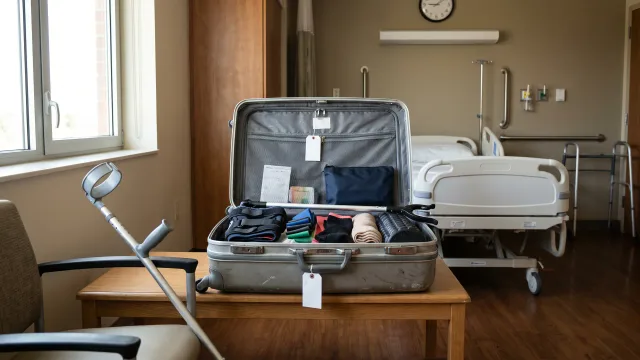
Pack in small sets that the companion can reach easily. Joint replacement is not the time for heavy cases or clothing that needs bending, twisting or complicated fasteners.
Kannur has a warm, humid climate for much of the year, with seasonal rain. Light layers and a simple rain covering may be useful, but footwear must remain stable on wet surfaces. Check the weather shortly before travel rather than packing from a general climate description.
4. Hand-luggage essentials
- Passport, visa, hospital letter and contacts
- Essential medicines and prescriptions
- Phone, charger and power bank within airline rules
- One change of loose clothing
- Glasses, hearing aids and other daily devices
- Copies of imaging access details
Keep technology simple
Bring a working phone, charging cable and a plug adaptor suitable for India if required. Store key addresses and contact numbers offline. A small extension lead may be useful only if the accommodation permits it safely.
Do not rely on one phone for every medical record. Keep a printed medicine list and discharge summary, especially for the return journey.
5. Items to confirm before buying
Do not routinely purchase a brace, compression stockings, wound dressings, raised toilet seat or walking frame. The required size and type depend on the operation, accommodation and individual assessment. Some aids and consumables can be supplied or arranged locally.
Think about the return journey
Airline cabin temperature and swelling can change comfort. Pack loose layers and make sure footwear still accommodates the recovering foot safely. Do not use an unapproved cushion, brace or device that changes hip or knee position for hours.
Request wheelchair assistance before travel. The confirmation belongs in the return folder with any medical form.
6. Prepare the accommodation
A suitable room has a workable route from the vehicle to the bed and bathroom, enough space for the walking aid and somewhere for the companion. Use the accommodation checklist to check photos, measurements, meals, laundry and review transport in one place.
Prepare the home before leaving
The return is easier when the home route is already clear. Remove loose rugs and clutter, plan where the patient will sleep and check access to the bathroom. Arrange transport from the arrival airport and the first physiotherapy or clinical visit.
If the bedroom is upstairs, the discharge and home plan needs to allow for those stairs. Airport transport and help at home are part of that same plan.
7. Build a return-flight folder
The discharge handover should bring together the summary, operation note, implant labels or card, postoperative imaging, medicine list, wound plan and physiotherapy instructions. The team should help identify missing items. Keep a copy in hand luggage, with any airline medical document. The printable handover sheet keeps the main restrictions and next review together.[1]
8. Final check two to three days before departure
Confirm the hospital time, transport, visa, passport, medicines and contact numbers. Recheck the airline's assistance and medical-document rules. Do not change prescribed medicines or buy new medical equipment at the last minute without advice.
Leave valuables and unnecessary equipment at home
Expensive jewellery, large amounts of cash, heavy work devices and duplicate suitcases add responsibility without helping recovery. Bring ordinary personal items and use standard payment methods described in the written hospital instructions.
A foldable walking aid should travel only if its size and suitability have been confirmed. Otherwise, arrange the correct aid after assessment.
What a companion should carry
Split essential documents and contact details so one lost bag does not remove every copy. The companion can carry ordinary clothing and chargers, but the patient's personal medicines should remain immediately accessible. Both travellers should know the accommodation and hospital address.
The companion also needs their own medicines, insurance details, visa documents and flexible return plan. Their belongings should not crowd the patient's safe walking space.
What not to treat as a holiday item
A packed sightseeing schedule, long car journey or beach plan should not shape recovery. Early outings are decided by mobility, wound, fatigue and medical advice. Leave room in the itinerary for rest, reviews and an extended stay.
Four-bag rule
Hand luggage: documents and essential medicines.
Checked bag: clothing and ordinary personal items.
Arrange in Kannur: confirmed aids, consumables and local supplies.
Leave unbought: unprescribed braces, stockings and wound products.
Use the visa guide, the local-stay guide and the travel clot guide to complete the plan.